
Introduction
You need more output, but buying presses, leasing floor space, and hiring a second shift would take months and a lot of capital. Or a new part is launching and your own line can't absorb the hand work. That's the point where outsourced production starts to look sensible.
Co-manufacturing and contract manufacturing are the two terms you'll hear most. Usage varies by industry, and the label rarely tells you what a provider will actually do. This guide explains the terms, compares the models, and shows how to vet a partner. It also covers where specialized support fits in.
Key Takeaways
- Co-manufacturing means an outside partner produces some or all of your product to agreed specifications.
- Contract manufacturing is the broader arrangement and can include sourcing, assembly, inspection, and packaging.
- Co-packing is usually narrower: packaging a product that's already made.
- Judge partners on capability, quality controls, capacity, communication, terms, and room to scale.
What Is Co-Manufacturing?
Co-manufacturing is an arrangement where an external manufacturer produces a product, component, or defined production stage for you. The work follows specifications you both agree on.
Responsibilities typically split like this:
- You provide: requirements, drawings or formulation, materials, branding, and quality expectations.
- The manufacturer provides: equipment, labor, and process execution.
The FDA's food guidance defines co-manufacturing as a brand owner arranging for another party to manufacture or process food. That definition covers food only. No single industry-wide definition exists for industrial or automotive work, so scope has to be confirmed with each provider.
How Co-Manufacturing Works
Scope runs from a complete finished product to selected stages such as forming, molding, stamping, blending, assembly, finishing, or packaging.
Ownership of the product, formulation, tooling, design, and intellectual property is a contract matter. It isn't automatic. Settle it in writing before production starts.
Two contrasting examples:
- A consumer brand hands off production and packaging of a finished product.
- An industrial manufacturer outsources secondary operations such as inspection, deburring, assembly, or kitting.
What Co-Manufacturing Does Not Always Include
A co-manufacturer may not offer product development, raw-material sourcing, warehousing, fulfillment, regulatory support, or packaging. Those exist only if the engagement names them.
Ask for a written capability and responsibility list before assuming anyone is turnkey.
Co-Manufacturing vs. Contract Manufacturing
Contract manufacturing is the broader legal and commercial practice of hiring an outside company to make goods or components under a contract. Co-manufacturing often describes the more hands-on, collaborative production relationship.
The terms overlap. Don't rely on the label. Focus on scope of work, ownership, quality responsibilities, and service levels.
Compare the Two Models by Scope
A limited arrangement outsources one production stage. A full-service one may cover material procurement, manufacturing, assembly, inspection, packaging, and delivery preparation. The wider the scope, the less internal workload and capital you carry, but the more you depend on the supplier. Volume flexibility usually improves too.
| Question | Limited-stage arrangement | Full-service arrangement |
|---|---|---|
| Who supplies materials? | Usually you | Often the provider |
| Who controls specifications? | You | You, with provider input on process |
| Who performs quality checks? | Split, per contract | Mostly the provider |
| Who owns production records? | Defined by contract | Defined by contract |

Co-Packing Is a Related but Narrower Service
Co-packing generally centers on filling, labeling, bundling, repackaging, palletizing, or otherwise preparing a finished product for shipment. Some co-packers add light processing or assembly. As the CPA glossary and university extension guidance both suggest, the functions can overlap, so confirm rather than assume.
A simple decision rule:
- Product already made? Choose a packaging-focused provider.
- Provider must create, transform, or substantially assemble it? Look at co-manufacturing or contract manufacturing.
Why Companies Use Outsourced Manufacturing
Outsourcing gives access to equipment, labor, process knowledge, or capacity you'd otherwise build yourself. UF/IFAS notes that co-packers often have excess processing capacity and process clients' products for a fee.
Labor pressure reinforces the case: BLS reported 584,000 manufacturing job openings in its latest JOLTS release.
Common situations include:
- New product launches
- Demand spikes and seasonal runs
- Labor constraints
- Facility limits
- Labor-intensive secondary operations
The Risks
Those benefits come with trade-offs:
- Minimum order requirements
- Limited visibility into production
- Dependence on the supplier's schedule
- Transportation complexity
- Inconsistent specifications
- Intellectual-property exposure
- Less direct control
Outsourcing works best when you keep clear specifications, measurable acceptance criteria, communication procedures, and oversight of critical quality decisions.
How to Evaluate a Co-Manufacturer or Contract Manufacturer
Start with a requirements checklist:
- Product or component type
- Materials, dimensions, or formulation
- Expected volumes
- Production stages
- Packaging needs
- Delivery locations
- Required launch date
- Special handling
Then make candidates prove it. Ask for:
- Relevant equipment and process experience
- Staffing and facility capacity
- Prior work on similar materials, not general industry claims
Quality and Compliance Due Diligence
Assess whether the provider has documented procedures for:
- Inspection methods and traceability
- Nonconformance handling and corrective action
- Change control and record retention
- Recall or containment
Verify certifications, customer requirements, audit history, regulatory obligations, and insurance. Don't treat any one certification as universal.
Customer rules differ. Ford's and GM's customer-specific requirements under IATF 16949, for example, set different containment and launch expectations.
Capacity, Timing, and Cost
Ask about:
- Current capacity, lead times, and scheduling
- Minimum order quantities, setup charges, and tooling
- Material purchasing, overtime, and expedited work
- Storage and transportation
NIST MEP suggests asking about capacity and growth potential, and cites 60%–80% utilization as a screening rule of thumb. A partner who can run a pilot or validation and then scale matters as much as unit price.

Contract Terms and Relationship Fit
Cover:
- Specifications and service levels
- Tooling and IP ownership
- Confidentiality
- Pricing changes
- Acceptance standards
- Defective-product responsibility
- Termination rights
- Business continuity and dispute procedures
Check references, do a site visit or virtual process review, and write down who handles production updates, quality concerns, approvals, and escalation.
What the Process Looks Like
1. Project brief. Share drawings, formulations, samples, quality requirements, demand assumptions, packaging details, and delivery expectations so the provider can judge fit.
2. Quotation and validation. Expect a capability review, cost assumptions, process planning, sample evaluation, pilot production, first-article or initial inspection, and agreed acceptance criteria. In automotive work this often means PPAP, which SAE describes as evidence the process can consistently meet requirements at customer demand rate.
3. Ongoing production controls. These include purchase-order review, incoming-material checks, in-process inspection, final verification, nonconformance reporting, shipment release, and recordkeeping. Adapt them to your industry.
4. Regular performance reviews. Cover quality, schedule adherence, responsiveness, capacity changes, corrective actions, and improvement opportunities.

Where Manufacturing Support Fits in an Outsourced Production Strategy
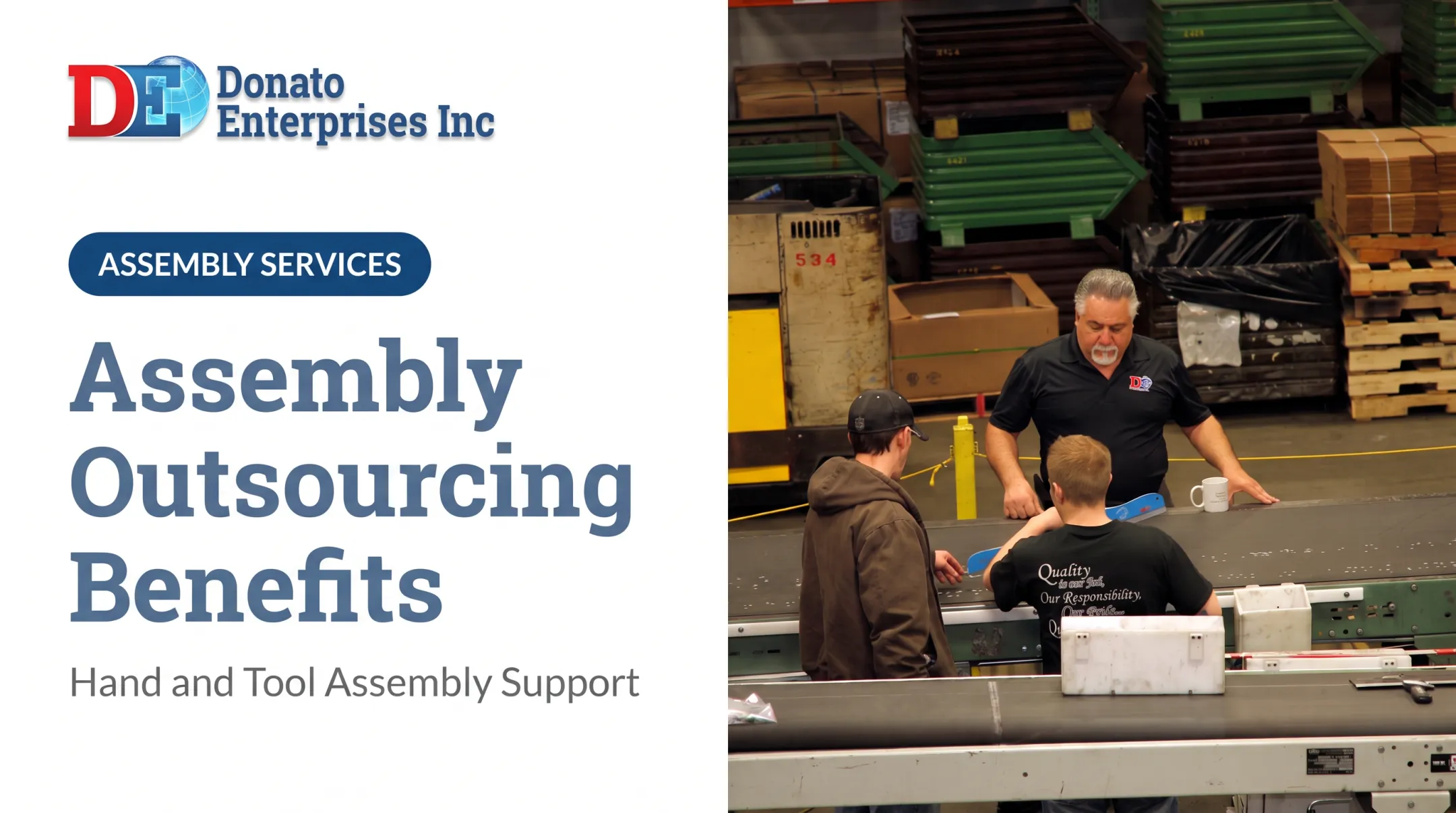
Many manufacturers pair a primary production partner with a specialist for inspection, sorting, containment, assembly, packaging, cleaning, deburring, kitting, or rework.
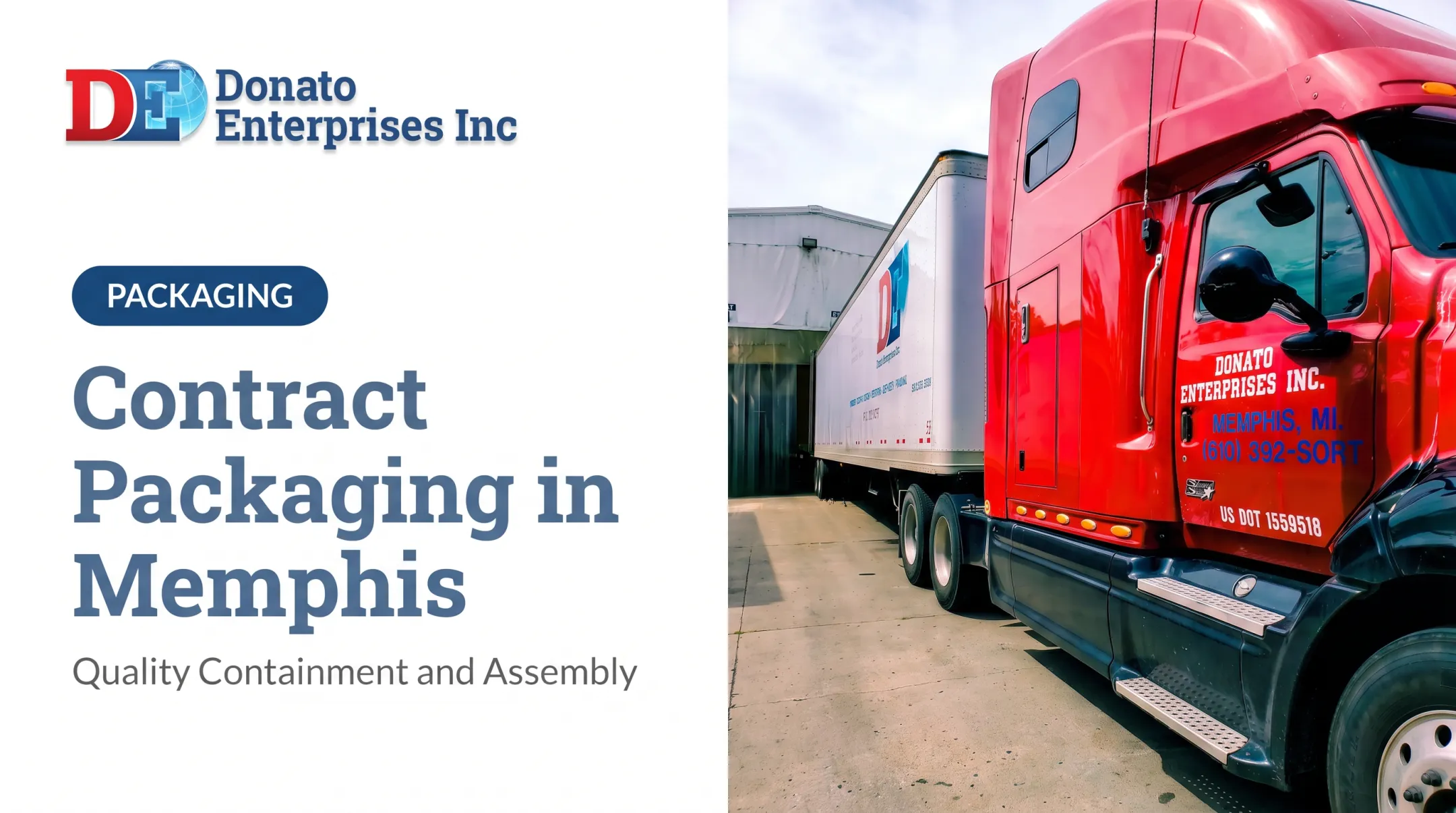
Donato Enterprises, Inc. is a family-owned manufacturing-support company founded in 1996 and based in Memphis, Michigan. It works on customer-supplied parts for automotive suppliers and other manufacturers, focusing on hands-on quality and secondary operations rather than turnkey co-manufacturing.
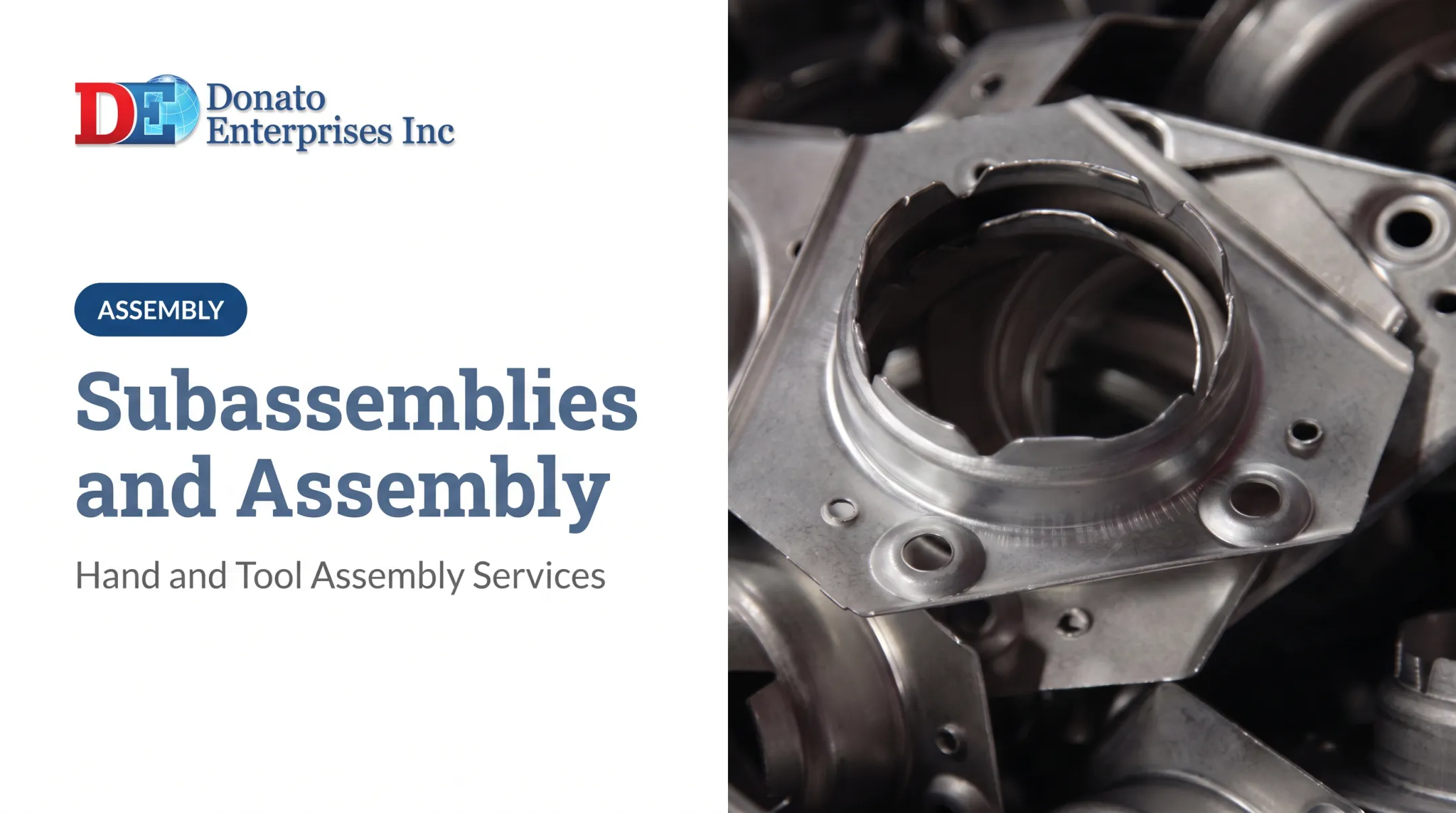
Services cover inspection, assembly, packaging, cleaning, deburring, and kitting, built on proprietary inspection and containment processes. The company reports 99.965% sort accuracy and 100% on-time delivery.

Common fit scenarios include:
- Suspect-part alerts and customer complaints
- Safe-launch programs
- High-volume sorting
- Stamping deburring
- Molding flash removal
- Casting cleanup
- Outsourced assembly and kitting
If a quality or secondary-operations bottleneck is slowing you down, or you want support alongside an existing production partner, call Donato Enterprises at 810-392-7678 to request a quote.
Frequently Asked Questions
How do I find a co-packer?
Define your product and packaging requirements, then search industry directories and ask for referrals. Verify capabilities and quality controls, compare capacity and pricing, and start with a trial or validation run.
Is co-packing the same as co-manufacturing?
Not automatically. Co-packing usually means packaging an already-made item, while co-manufacturing generally involves producing or substantially transforming it. Some providers offer both.
What is co-manufacturing?
It's outsourcing some or all production to an external partner under agreed specifications, responsibilities, quality requirements, and commercial terms.
What is the difference between co-manufacturing and contract manufacturing?
Contract manufacturing is the broader contractual arrangement. Co-manufacturing often describes the operational production relationship. Usage varies by industry, so scope matters more than terminology.
How do I choose between outsourced and in-house manufacturing?
Compare total cost, expertise, equipment, capacity, quality risk, speed, control, confidentiality, and long-term demand. Many companies combine internal and external capabilities.