
Introduction
A burr looks small. On a stamped bracket or a machined housing, it can cut a hand, jam an assembly, or ruin a seal. Deburring removes burrs, sharp projections, and unwanted edge material from metal parts. Finishing is the broader category: polishing, blasting, plating, passivation, cleaning, and other treatments that refine a surface.
This guide is for manufacturers, metal stampers, machinists, die casters, foundries, automotive suppliers, and quality teams that need safe, consistent, assembly-ready parts.
Many shops treat deburring as simple cleanup. It isn't. Material, geometry, tolerance, volume, and finish requirements decide the right process.
Below: the methods, a workable process flow, selection factors, and the limits of each approach.
Key Takeaways
- Deburring removes raised material; metal finishing covers smoothing, polishing, blasting, coating, and cleaning.
- Burr location, material, geometry, tolerance, volume, and finish decide the method.
- Controlled deburring protects workers, assembly fit, and downstream coating.
- Inspect afterward to verify burr removal, edge condition, and critical dimensions.
What Are Deburring and Metal Finishing?
Deburring explained
A burr is an unwanted raised edge, lip, projection, or fragment left by cutting, drilling, milling, stamping, sawing, casting, or welding. A 2020 Springer review notes that no machining method eliminates burr formation entirely, so deburring is an added operation.
Removing burrs lets a part be handled safely, assembled correctly, and cleaned effectively.
Metal finishing explained
Metal finishing changes a part's surface condition, appearance, texture, cleanliness, corrosion resistance, or function. It can include:
- Polishing, tumbling, and vibratory finishing
- Abrasive blasting
- Plating, anodizing, and passivation
- Coating and precision cleaning
Deburring targets edges and projections. Finishing refines surfaces.
How the two relate
Deburring is often the first of several finishing stages, but it doesn't make a part polished, coated, or corrosion-resistant on its own.
Removing a burr is also different from creating an intentional edge break or chamfer. The required edge condition belongs on the engineering drawing, customer specification, or quality plan. ISO 13715 covers how to indicate undefined edges, including edges free of burr or with a limited burr, but it sets no universal burr height.
Why Deburring and Finishing Are Used in Metal Manufacturing
Why manufacturers deburr
Burrs cause real problems:
- Handling cuts and lacerations
- Interference with mating components
- Trapped debris
- Damaged seals or wiring
- Stress concentrations
A Fluid Power Journal article says burrs can interfere with seal fit, increase friction, and damage a shaft or bore during installation. Consistent edges also support coating adhesion, cleanability, visual quality, and fewer customer complaints.
On safety, NIOSH claims data for metal fabrication show lacerations make up a large share of hand injuries from machines. That data doesn't attribute the injuries to burrs specifically, so treat it as context, not proof.
No credible general cost or rework benchmark exists for deburring, so verify your own scrap and rework numbers.
Where these processes are applied
Deburring follows machining, drilling, milling, stamping, sawing, die casting, forging, welding, and casting. In automotive work, think stamped brackets, machined housings, and cast components.
It can happen:
- In-machine after machining
- As a secondary operation before inspection or coating
- During rework
- As final preparation before assembly and packaging
Typical triggers
Common triggers include:
- A new burr pattern after a tooling change
- A customer complaint or quality spill
- A product launch or volume increase
- A need for consistent edges across shifts
Depending on the program, deburring may be a recurring in-line step, a batch operation, condition-based rework, or temporary containment.
Who requires it
Deburring isn't mandated everywhere. Part function, worker safety, customer specifications, drawings, and the consequences of leaving burrs in place drive the need.
In automotive, APQP, control plans, and PPAP support planning and approval, while GM GP-12 and Stellantis safe-launch provisions are customer-specific. None sets a burr threshold.
How Deburring and Finishing Processes Work
The flow is simple: define the required edge and surface condition, identify burr and part characteristics, run a controlled process, then inspect and document.
Step 1: Define requirements and inspect the incoming part
Before picking a method, establish:
- Burr location, size, and orientation
- Material, geometry, and critical dimensions
- Edge-break limits and surface-finish requirements
- Production volume and downstream operations
Review drawings, customer specifications, control plans, and representative parts. Don't choose a process by appearance alone.
Step 2: Select and perform the operation
Match the part to a tool, media, abrasive, fixture, chemical solution, or machine, then set speed, pressure, feed rate, and contact time. Remove unwanted material while avoiding:
- Rounding on functional edges
- Distortion in thin sections
- Damage to cosmetic surfaces
- Media lodged in holes or features
- Drift in critical dimensions
Step 3: Inspect, separate, and release
Checks can include visual and tactile inspection, magnification, dimensional measurement, surface-finish verification, and cleanliness checks. Options range from first-piece approval and in-process checks to sample or 100% inspection. No single level fits every application; the part's risk should set it.

Common deburring and finishing methods
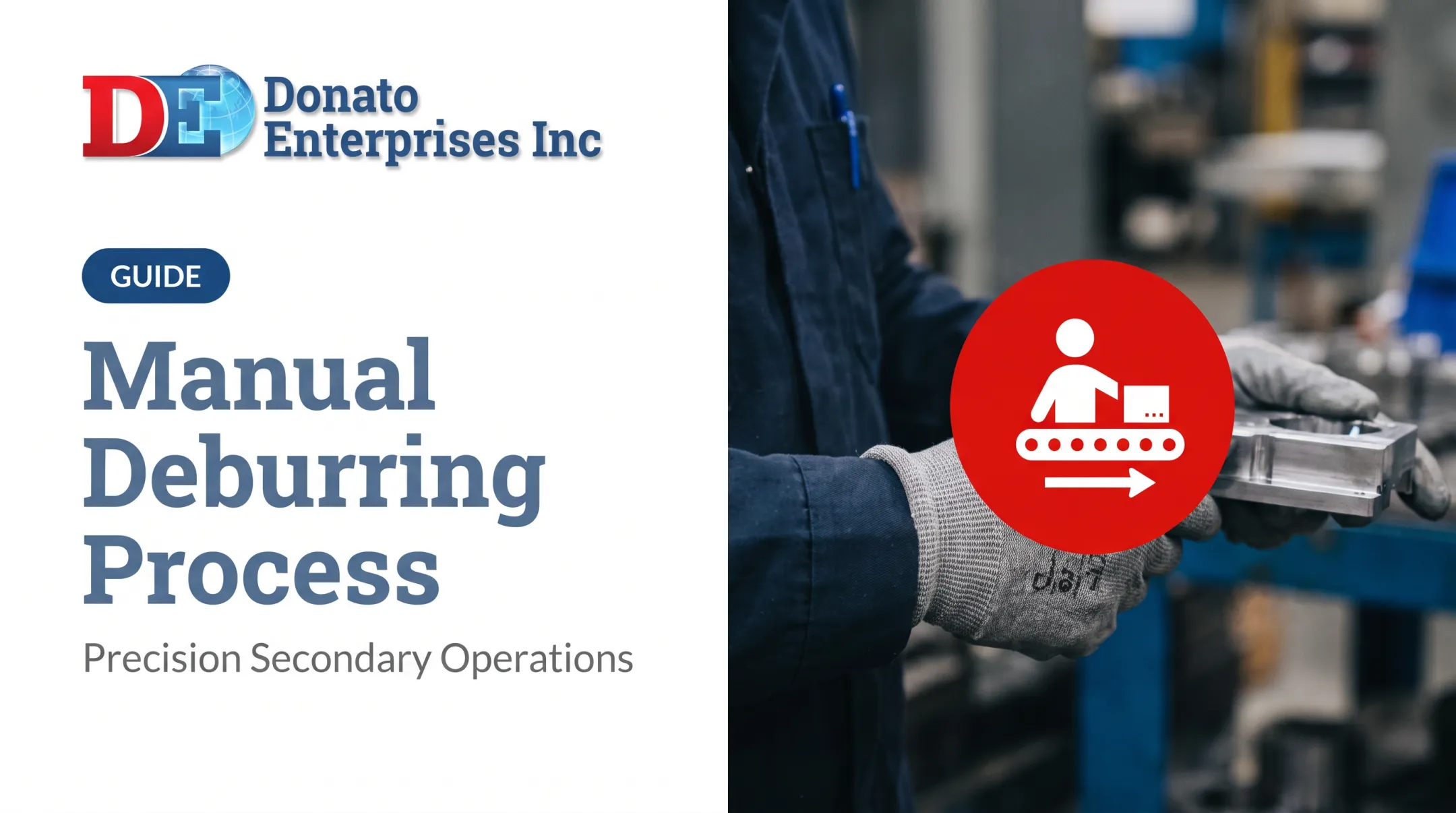
Manual deburring uses files, blades, stones, brushes, or handheld tools. It suits low-volume, complex, or delicate work. Tradeoffs include higher labor cost, limited repeatability, ergonomic strain, and lower throughput.
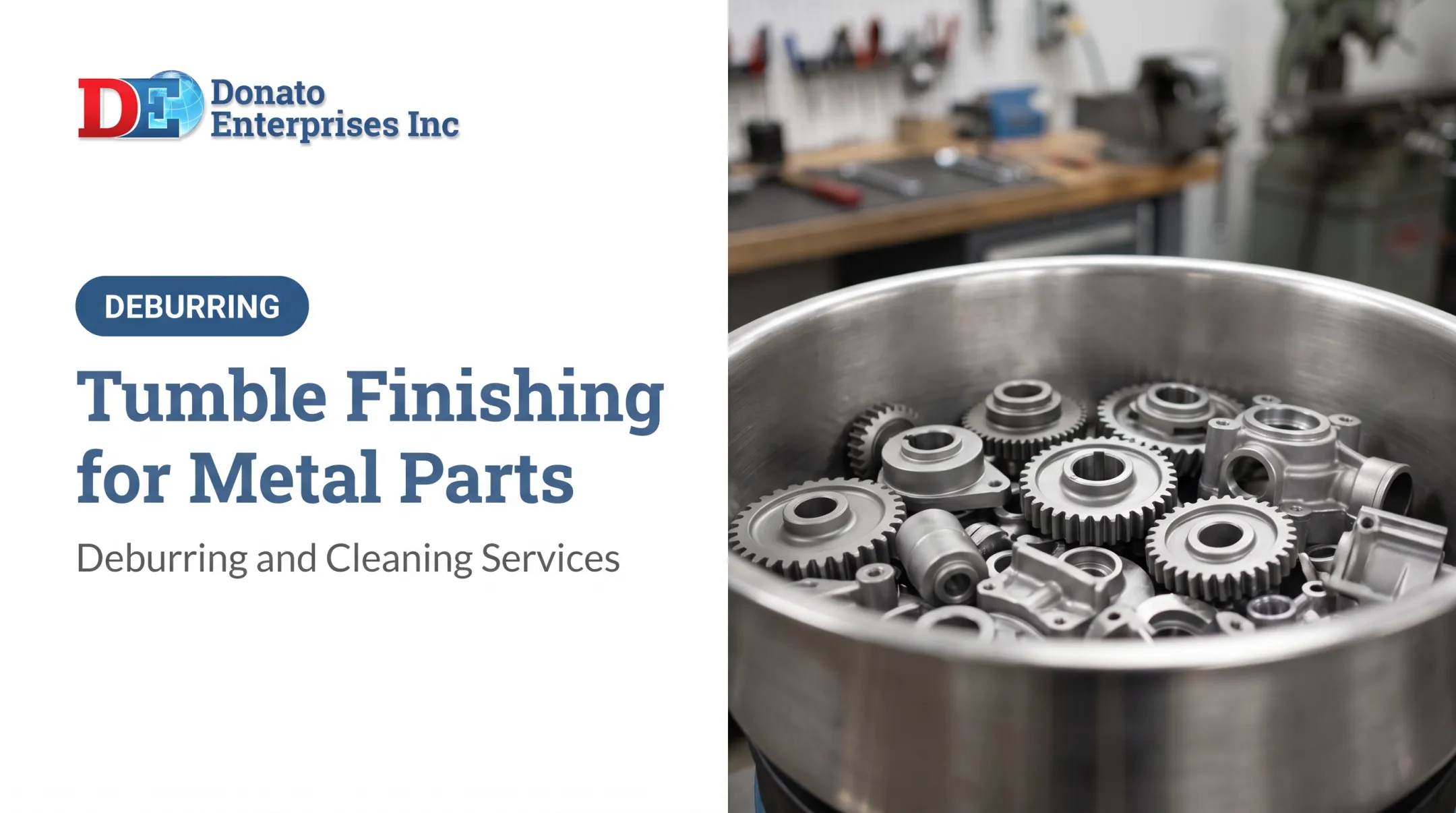
Mass finishing covers tumbling, vibratory, and centrifugal systems. The mass finishing handbook warns that poor media-to-part ratios cause part-on-part damage and that media must be sized to avoid lodging in holes and slots.
Brushing, grinding, and polishing handle edge and surface work when bulk media is not the right fit.
CNC or robotic deburring gives repeatable tool paths for higher volumes. It demands control of tool geometry, feed, speed, contact force, workholding, and accessibility, plus attention to tolerance risk.
Thermal and electrochemical deburring handle hard-to-reach burrs such as cross-hole intersections. Electrochemical work needs conductive material, and thermal methods leave combustion residue to clean. Evaluate material compatibility, safety, and post-processing first. Abrasive flow machining and waterjet deburring serve similar internal-passage problems.

Sequencing finishing operations
Order matters. Cleaning, deburring, polishing, blasting, coating, plating, passivation, and inspection may need a specific sequence so one step doesn't contaminate or undo another. ASTM B322 covers cleaning before electroplating, and ASTM A967 requires passivation on a chemically clean stainless surface. No universal sequence exists, so follow the governing standard for each finish.

Key Factors, Common Issues, and Process Suitability
Key factors that affect results
- Material: type, hardness, ductility, thickness, coating, heat treatment
- Burr: origin, thickness, direction, and whether it sits on an outside edge, hole, cross-hole, slot, thread, or internal passage
- Geometry: wall thickness, cosmetic surfaces, fragile features, workholding, access, part-to-part contact
- Requirements: edge break, tolerance, flatness, roughness, cleanliness, coating compatibility
- Production: volume, batch size, cycle time, labor, repeatability, and whether to run manual, automated, or outsourced
- Safety: abrasive dust, chemicals, thermal hazards, guarding, ventilation, PPE
OSHA 1910.215 covers abrasive wheel guarding, 1910.132 requires a PPE hazard assessment, and OSHA lists aluminum, iron, and magnesium among combustible metal dusts. Confirm what applies to your operation.
Common issues and misconceptions
Smooth-looking isn't the same as compliant. Over-processing can remove too much material, round a functional edge, distort thin sections, change surface texture, or add contamination.
A part can look fine and still miss dimensional, edge, cleanliness, or finish requirements.
Typical failure points:
- Inconsistent results between operators
- Missed internal burrs
- Media lodged in passages
- Damaged cosmetic areas
- Remaining rollover burrs
- Inspection methods that can't detect the real defect
When deburring may not be appropriate
Skip or rethink a process when the specification doesn't require an edge change, a later operation removes the burr, or the method adds more risk than benefit.
Signs the process needs redesign:
- Repeated dimensional failures
- Heavy manual rework
- Inconsistent edge breaks
- Damaged parts or rising scrap
- Media contamination
- Burrs that can't be reached
An external provider makes sense for overflow, labor-intensive secondary operations, rework, sorting, cleaning, or containment that would otherwise disrupt primary production.
Donato Enterprises, based in Memphis, Michigan, provides deburring alongside inspection, sorting, cleaning, parts rework, assembly, packaging, kitting, and quality assurance support for manufacturing customers.
Its cleaning and deburring services use hand-work techniques and equipment, including filing, grinding, and polishing, by staff trained in QS and ISO guidelines. Stampers, die casters, and foundries often outsource this kind of cleanup so presses and machining cells keep running.
Conclusion
Deburring removes unwanted burrs and projections. Metal finishing is broader, covering processes that refine surface, appearance, cleanliness, or performance.
The right process follows from:
- Material and burr characteristics
- Part geometry and tolerance
- Finish specification and volume
- Safety requirements and inspection plan
Apply it with control and verify the result, especially with delicate features, tight tolerances, internal passages, or customer-critical surfaces. Don't default to whatever method is already on the floor.
Frequently Asked Questions
What are metal finishing techniques?
They are processes that alter a part's surface or appearance, such as polishing, tumbling, vibratory finishing, blasting, plating, anodizing, passivation, coating, cleaning, and deburring.
What does deburring mean?
Deburring removes sharp edges, burrs, fins, and other unwanted projections created during metal manufacturing. It isn't the same as polishing or coating.
Why is deburring important for metal parts?
It protects workers from cuts, helps parts assemble and function properly, supports cleanliness, and improves coating or finishing quality by removing defects burrs cause.
What is the difference between deburring and metal finishing?
Deburring is one specific secondary operation focused on edges. Metal finishing is the broader category that alters a part's edge, surface, appearance, protection, or cleanliness.
Which deburring method is best for metal parts?
No single method wins. Selection depends on material, burr location, geometry, tolerances, finish requirements, volume, and required repeatability.
Can deburring change a part's dimensions or tolerances?
Yes, if uncontrolled. It can remove too much material or distort sensitive features. Controlled tooling, fixtures, process parameters, and post-process inspection manage the risk.