
Introduction
Packaging quality control protects more than the box. It preserves the product, prevents shipment disruptions, supports traceability, and satisfies customer requirements. A crushed carton or a wrong label can stop a line at the receiving dock.
Too many plants still rely on visual checks or end-of-line inspection alone. That approach misses dimensional drift, weak seals, material variation, short counts, mislabeled parts, and packaging that fails in transit. TT Club found that poor packing caused or worsened two-thirds of the cargo-damage incidents it analyzed.
This guide defines packaging QC, covers the main inspection points and tests, lays out a practical process, and explains when outside inspection, sorting, packaging, or containment support makes sense.
Key Takeaways
- Packaging QC checks materials, processes, and finished packages against documented specifications.
- Strong programs combine incoming, in-process, and finished-package checks with traceable records.
- Criteria should reflect product risk, customer requirements, and transport conditions.
- Closed-loop corrective action turns each defect into a process improvement.
What Is Quality Control in Packaging?
Packaging QC is the systematic inspection, measurement, and testing of packaging materials, components, operations, and finished packages against approved requirements.
QC vs. QA
ASQ describes quality assurance as a planned, system-wide activity that builds confidence that requirements will be met. QC is the operational subset: the checks and tests that detect and evaluate defects. QA prevents. QC verifies.
Where It Applies
NMFTA splits packaging into three levels, and QC applies to each:
- Primary: the layer touching the product, such as containers, bags, or part trays
- Secondary: grouping packs, such as cartons and dividers
- Tertiary: bulk handling and distribution packaging, such as pallets, stretch wrap, and shipping configurations
Confirm the terminology with your customer's packaging specification, since definitions vary.
Setting Requirements
Build requirements from:
- Product characteristics and handling needs
- Storage and transport conditions
- Customer specifications
- The cost of a packaging failure
A deburred metal part that scratches in transit needs different protection than a sealed pouch.
Rules and Standards
Regulatory applicability is conditional:
- The FTC's Fair Packaging and Labeling Act covers qualifying consumer commodities, not industrial B2B shipping packages.
- DOT/PHMSA packaging rules (49 CFR 173.24) apply only when a shipment is regulated as hazardous material.
- CPSC rules are product-specific.
Standards such as ISO 2859 or ASTM methods should be chosen by packaging type and inspection objective, not applied automatically.
In automotive, customer requirements often matter most. AIAG's B-10 guideline covers trading-partner labels, and some customers, such as Tenneco, require PPAP approval of packaging and labeling methods. That is a customer rule, not a universal one.
What Packaging Quality Control Checks
Incoming Packaging Materials and Components
Incoming inspection confirms materials match approved specifications before they reach production. Check:
- Material type, thickness, and dimensions
- Surface condition
- Closures, labels, cartons, and adhesives
- Protective materials
- Supplier documentation
Humidity matters here. The Fibre Box Association notes high humidity can weaken corrugated board and cause delamination, warping, and equipment jams. Dry storage is part of incoming control.
Dimensional, Visual, and Workmanship Inspection
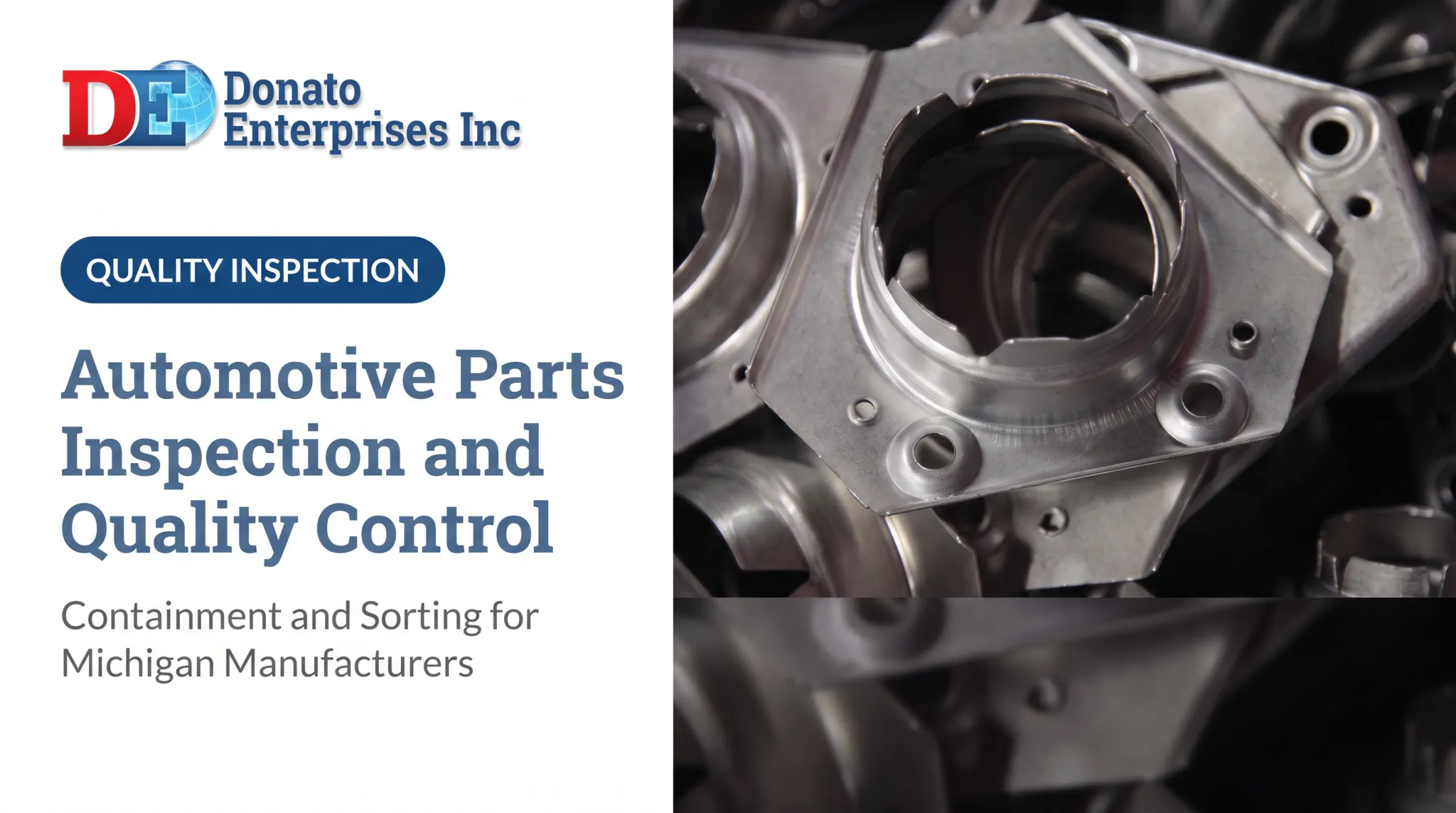
Measure length, width, height, diameter, wall or film thickness, weight, and fit. Then look for surface damage, deformation, burrs, scratches, contamination, and print defects. Any of these can affect assembly, handling, protection, or presentation.
Seals, Closures, and Package Integrity
Inspect seal continuity, closure fit, adhesive performance, tamper-evident features, leaks, tears, and punctures. A package that looks fine can still fail under load, so functional testing matters.
- ASTM F88/F88M measures seal strength and records failure mode.
- ASTM F2096 screens for gross leaks (destructive, with sensitivity limits).
- ASTM F1929 is a dye-penetration method with a medical-packaging scope.
No single tamper-evidence method is standard across industrial packaging. Use one only when a customer or product specification calls for it.
Labels, Barcodes, Quantities, and Traceability
Inspectors verify the correct label or artwork version, legibility, barcode readability, lot or batch data, part identification, quantity, and orientation. ISO/IEC 15416 covers linear barcode print-quality grading. GS1 specifications make the SSCC mandatory on GS1 logistic labels. Errors here cause shipment, assembly, and customer-acceptance problems.
Functional and Transport Performance
Match the test to intended use. Confirm the current edition and the customer specification before choosing. These are test methods, not pass/fail limits.
| Method | What it evaluates |
|---|---|
| ASTM D4169 | Shipping units against distribution hazards |
| ASTM D4577 / D642 | Compression resistance |
| ASTM D5276 | Free-fall drop of loaded containers |
| ASTM D999 | Vibration of filled shipping containers |
| ISTA 1A / 3A | Packaged products through basic integrity or parcel-simulation tests |

How to Build a Packaging Quality Control Process
Define Specifications, Risks, and Acceptance Criteria
Document measurable requirements for materials, dimensions, appearance, seals, labels, quantities, function, and transport performance. Then classify defects by severity.
ASQ lists critical, major, and minor as common classes but stresses tailoring them to your product, ideally in a customer-approved defect catalog. Decide which failures demand immediate containment.
Plan Sampling and Inspection Frequency
Sample size and frequency should reflect volume, defect history, customer requirements, packaging risk, and the cost of a missed defect. ISO 2859-1 and ANSI/ASQ Z1.4 organize attribute sampling around AQL, with normal, tightened, and reduced inspection.
Switching rules move inspection up or down based on lot results. AQL is a plan index, not a guaranteed defect rate. Follow your customer's control plan where one exists.
Inspect at Incoming, In-Process, and Finished Stages
- Verify incoming materials against specifications.
- Monitor packaging operations while production runs.
- Inspect finished packages before release.
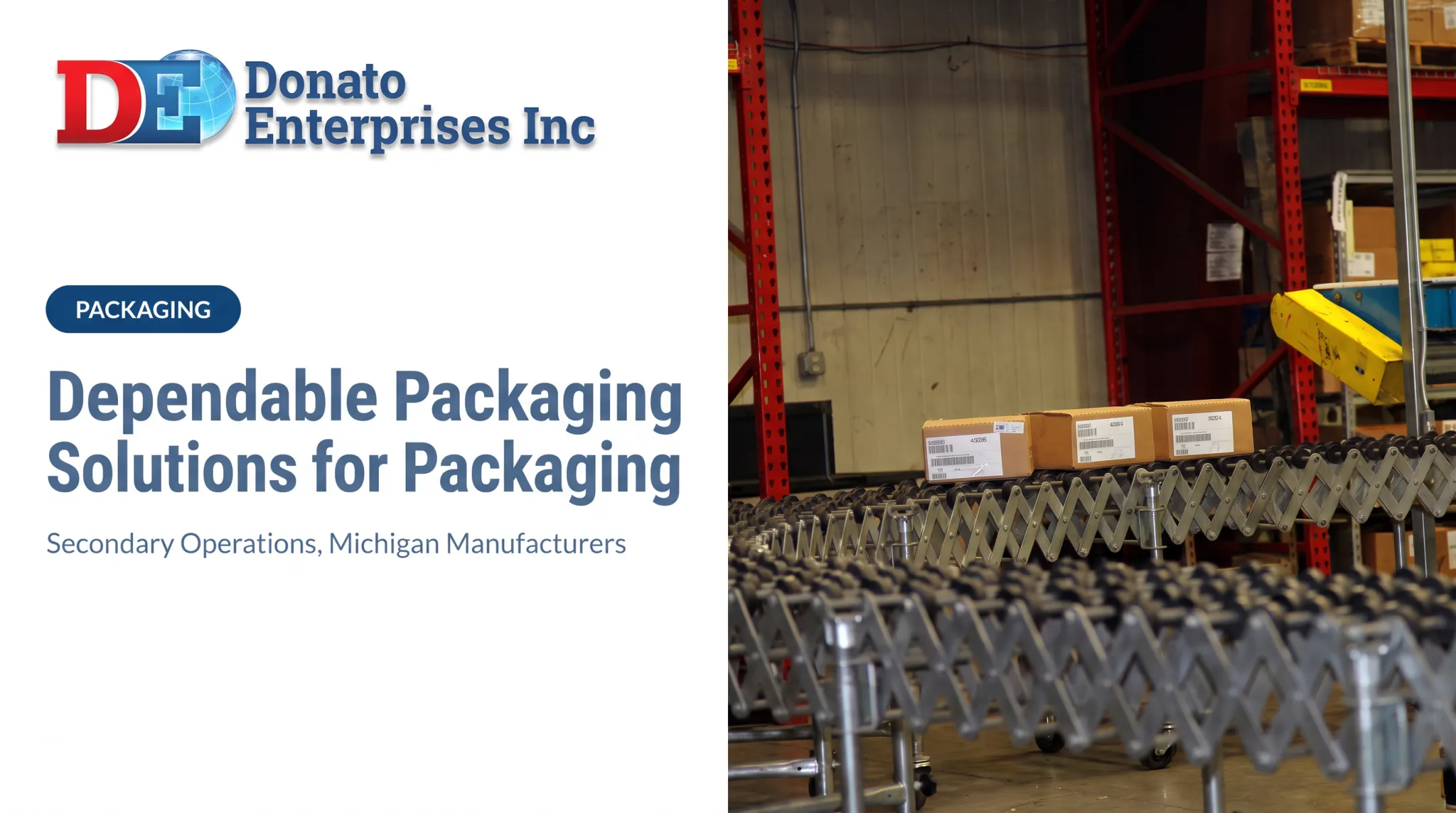
- Run receiving or pre-shipment checks when the supply chain requires them.

Document Findings and Maintain Traceability
Each inspection record should capture:
- Date, line or supplier, and inspector
- Material or part number, lot or batch
- Criteria used and measurements
- Photographs and defects found
- Disposition
- Related customer or shipment information
Contain Defects, Find Root Causes, and Verify Corrective Action
Segregate suspect material and control affected shipments first. Then find the cause. ASQ's 8D sequence covers containment, cause and escape-point analysis, corrective action, effectiveness verification, and systemic prevention. Tools like 5 Whys help. Retrain or adjust the process, then review trend data to confirm the issue stays closed.

Common Packaging Defects and Corrective Actions
Physical, Material, and Dimensional Defects
Typical physical and dimensional defects include:
- Crushed or warped cartons and containers
- Cracks, dents, scratches, and burrs
- Wrong dimensions or thickness variation
- Damaged protective packaging
These usually trace to a few sources:
- Supplier variation or unsuitable material
- Worn tooling
- Rough handling or poor storage
- Process drift
Verify the actual cause before prescribing a fix.
Seal, Closure, and Performance Failures
Seal and performance failures can damage product or disrupt shipments:
- Leaks and weak seals
- Poor closure fit or punctures
- Thin cushioning
- Failed compression or vibration performance
Pick a targeted functional test rather than trusting appearance. A seal-strength pull test tells you more than a glance at the seal.
Labeling, Quantity, Cleanliness, and Assembly Errors
Labeling, quantity, and assembly errors include:
- Wrong labels or unreadable barcodes
- Missing components, wrong counts, or mixed parts
- Contamination and incomplete kits
Corrective actions include:
- Line clearance between runs
- Label version control
- Count verification against the purchase order or customer specification
- Material segregation
- Documented reinspection
Packaging Quality Control for Manufacturing and Automotive Operations
Automotive and industrial manufacturers need packaging that does more than hold parts. Effective packaging must:
- Prevent part damage in transit and handling
- Preserve identification and traceability
- Confirm quantities before shipment
- Protect finished or deburred components
- Fit customer handling and assembly requirements
Those same packaging choices often sit inside broader quality systems. PPAP expectations vary by customer. AIAG does not make packaging a universal PPAP element, but some OEMs and suppliers require it. Containment rules differ as well. GM's Early Production Containment procedure and Nexteer's CS1 and CS2 levels are customer-specific controls, not industry-wide defaults.
Outside support makes sense when you face:
- Customer complaints or suspect-part alerts
- CS1/CS2 status
- Launch or safe-launch programs
- High-volume sorting, rework, or repackaging
- Assembly or kitting that floor space or headcount can't absorb
- A temporary shortage of quality personnel
Donato Enterprises, Inc., a family-owned provider in Memphis, Michigan, supports manufacturers with inspection, sorting, packaging, assembly, kitting, and quality containment. Its proprietary inspection and containment processes are built for defect-free, on-time delivery.
Frequently Asked Questions
What is quality control (QC) in packaging?
QC is the inspection, measurement, and testing of packaging materials, processes, and finished packages against documented requirements. It detects defects so they can be contained and corrected.
What are the 7 main functions of packaging?
Commonly cited functions are containment, protection, preservation, handling convenience, communication, identification, and promotion or presentation. Terminology varies by source.
What are the 5 requirements of packaging?
Practical requirements include protecting the product, maintaining integrity, supporting handling and transport, communicating required information, and meeting applicable safety or compliance expectations. The framework varies by industry.
What are the 3 Ps of packaging?
No authoritative industrial definition exists. One common educational version is protection, preservation, and presentation. Other references use different versions, so match the definition your customer or standard uses.
How often should packaging quality control inspections be performed?
No universal schedule exists. Frequency depends on packaging risk, volume, supplier history, process stability, customer requirements, and recent inspection results.
What is the difference between packaging QC and QA?
QA prevents defects through systems and process controls. QC verifies results through inspection, measurement, testing, and corrective action.