
Integrated repack treats those corrections as one coordinated process. It links receiving, inspection, sorting, containment, repackaging, labeling, assembly, kitting, quality verification, and outbound preparation.
This guide covers what integrated repack includes, when it pays off, how controls preserve traceability, and what to check before choosing a provider.
Key Takeaways
- Integrated repack ties packaging changes to quality, inventory, and shipment requirements.
- It fits quality spills, damaged or mixed stock, launch programs, and labor-heavy secondary work.
- Written instructions, inspection criteria, barcode or lot tracking, and final verification prevent new errors.
- Judge providers on hands-on capability, documentation, capacity, and exception handling.
What Is Integrated Repack in Logistics?
What an integrated repack process means
"Integrated repack" is a service model, not a standardized logistics term. Existing products or components move into a new packaging configuration while inspection, handling, quality, and fulfillment steps stay connected.
A repack product is a finished good, component, or part taken out of its original packaging and placed in a new carton, tray, bag, pallet, kit, or customer-specific configuration. It is not a newly manufactured product.
The broader idea borrows from logistics management, which the Council of Supply Chain Management Professionals describes as an integrating function that coordinates logistics activities and ties them to manufacturing, sales, finance, and IT.
How integrated repack differs from related services
- Repacking: changes the packaging of an existing product.
- Co-packing: a provider packages products for brands, often with filling, sealing, labeling, and turnkey services.
- Relabeling: changes identification information only.
- Rework: changes the product or its condition, and reworked product needs reinspection.
- Kitting: combines multiple components into one package.
- Packaging logistics: designs packaging systems to support storage, handling, and transport.
Here is how one job might look. A stamper ships 20,000 brackets, and some arrive with burrs and bent corners. The provider sorts suspect parts, removes burrs, discards damaged inner packaging, builds kits with mating hardware, applies the correct label, and stages finished cartons for shipment. One job, one set of records.
How Integrated Repack Works: End-to-End Workflow
Step-by-step process
- Requirements intake. Confirm the part or SKU, quantity, packaging specification, customer instructions, condition requirements, due date, lot or serial information, labeling needs, and acceptance criteria before anyone touches material.
- Receiving inspection and disposition. Document incoming condition, then route units: accept, repack, rework, quarantine, return to supplier, or scrap. Separating conforming from nonconforming material keeps mixed inventory out of the next step.
- Sorting, containment, and secondary operations. Depending on risk and customer requirements, this may include 100% inspection, cleaning, deburring, flash removal, cosmetic checks, or dimensional checks.
- Repack configuration and identification. Replace cartons or inner packaging, change pack quantities, unitize bulk material, build kits, complete light assembly, and apply labels while preserving the original part, lot, serial, and customer identity.
- Final verification and release. Check counts, labels, barcodes, packaging integrity, and pallet or carton condition. Update status and document release to production, storage, a customer, or a carrier.

Quarantine matters most at step 2. Automotive customers such as Nexteer require suspect material to be identified and isolated across stock, work-in-process, and in-transit material so it isn't used by mistake.
A component shipment, start to finish
A box of 5,000 molded housings arrives with scattered flash and some crushed cartons. Receiving logs the condition and quarantines the crushed cartons.
Operators sort on visual standards, remove flash by hand, and move good parts into 250-piece trays. Each tray gets a label checked against the part number and revision.
A final count and barcode scan confirm quantities, and pallets go to shipment staging with a record of what was accepted, reworked, and scrapped.
Benefits and Use Cases of Integrated Repack
Operational benefits for manufacturers
- Fewer transfers, duplicate inspections, and vendor handoffs when related tasks sit in one controlled workflow.
- Internal operators and floor space stay free for production.
- Capacity flexes for temporary volume spikes or urgent customer requests.
Track the results. Useful measures include:
- Turnaround time and quantity accuracy
- First-pass acceptance and defect escapes
- Material usage, rework volume, and cost per completed unit
The American Society for Quality defines first-pass yield as the share of units that meet requirements without scrap, rerun, retest, return, or offline repair. No reliable industry benchmark exists for repack accuracy or savings, so set targets from your own baseline.
Manufacturing and automotive use cases
- Quality spills and launches: Tier 1 and 2 suppliers hit with a suspect-part alert, CS1/CS2 status, or customer complaint need fast inspection, sorting, repackaging, and documented release, including during the safe-launch window. Toyota's 2024 recall of 102,092 vehicles over machining debris shows what a quality escape can cost.
- Stampers: burr removal, cosmetic sorting, and 100% sorting without tying up presses.
- Injection molders and foam producers: flash removal, cosmetic sorting, sub-assembly, and kitting off the molding floor.
- Die casters and foundries: cleanup and inspection of raw castings so casting and machining cells keep running.
- Kitting and customer-specific packs: combining components, matching new pack quantities, or supporting a new customer without permanent headcount.
- Other triggers: damaged inbound packaging, mixed lots, returned inventory, changed labeling requirements, retail-ready configurations, and different transport or production destinations.

Quality, Compliance, and Traceability Controls
Quality controls built into the process
- Write standard operating procedures covering inspection points, acceptable and unacceptable conditions, pack quantities, label placement, closure requirements, escalation rules, and disposition of failed units.
- Set inspection depth by product risk, customer instructions, defect history, and containment requirements
- Match sampling or 100% inspection to the job; neither fits everything. Nexteer's launch containment, for instance, requires 100% checks of special characteristics, not every feature
- Use visual standards, defect codes, first-piece approval, second-person verification for critical attributes, photo records where useful, and signoff before release.
Traceability, labeling, and safety
Barcode, part number, lot, serial, purchase order, and customer data must stay linked to the repacked product. Break that link and you break recall, warranty, inventory, and shipment traceability.
Label control means checking revision, barcode readability, quantity, destination, and any customer-specific content. Automotive shipments often follow AIAG's B-10 and B-16 label guidelines.
Regulated goods add requirements only when the product triggers them:
- Hazardous materials: 49 CFR Part 173 requires packaging compatible with contents, and markings and labels must stay visible on overpacks.
- Hazardous chemicals: OSHA's 29 CFR 1910.1200 sets hazard communication and label legibility rules.
- Imported articles: 19 CFR 134.26 addresses origin marking when imports are repacked.
- Pharmaceuticals: 21 CFR Part 211, Subpart G controls labeling and packaging materials.

Ordinary industrial parts usually fall outside these rules, so confirm applicability before assuming.
Exception handling and continuous improvement
- Record nonconformances, shortages, damaged units, label errors, and process deviations
- Escalate to the customer before releasing questionable product
- Review that data regularly; recurring packaging failures or excess material use often point to a weak packaging specification or inspection plan worth fixing upstream
How to Evaluate an Integrated Repack Provider
Look past unit price and confirm the partner can run the full process under controlled conditions.
- Operational capability: Can they combine inspection, sorting, containment, assembly, packaging, cleaning, deburring, kitting, labeling, and QA, or is repack only isolated labor?
- Process control and reporting: How do specs and work instructions get controlled, and how are quantities, dispositions, lot or serial data, exceptions, and completion status recorded?
- Capacity and responsiveness: Cover normal and surge volumes, urgent quality events, turnaround, staffing, equipment, packaging procurement, on-site versus off-site work, and instruction changes.
- Certification context: Don't assume ISO. IATF rules exclude firms that only sort, kit, inspect, package, or warehouse from standalone certification, so ask which quality system they actually follow.
A Michigan example
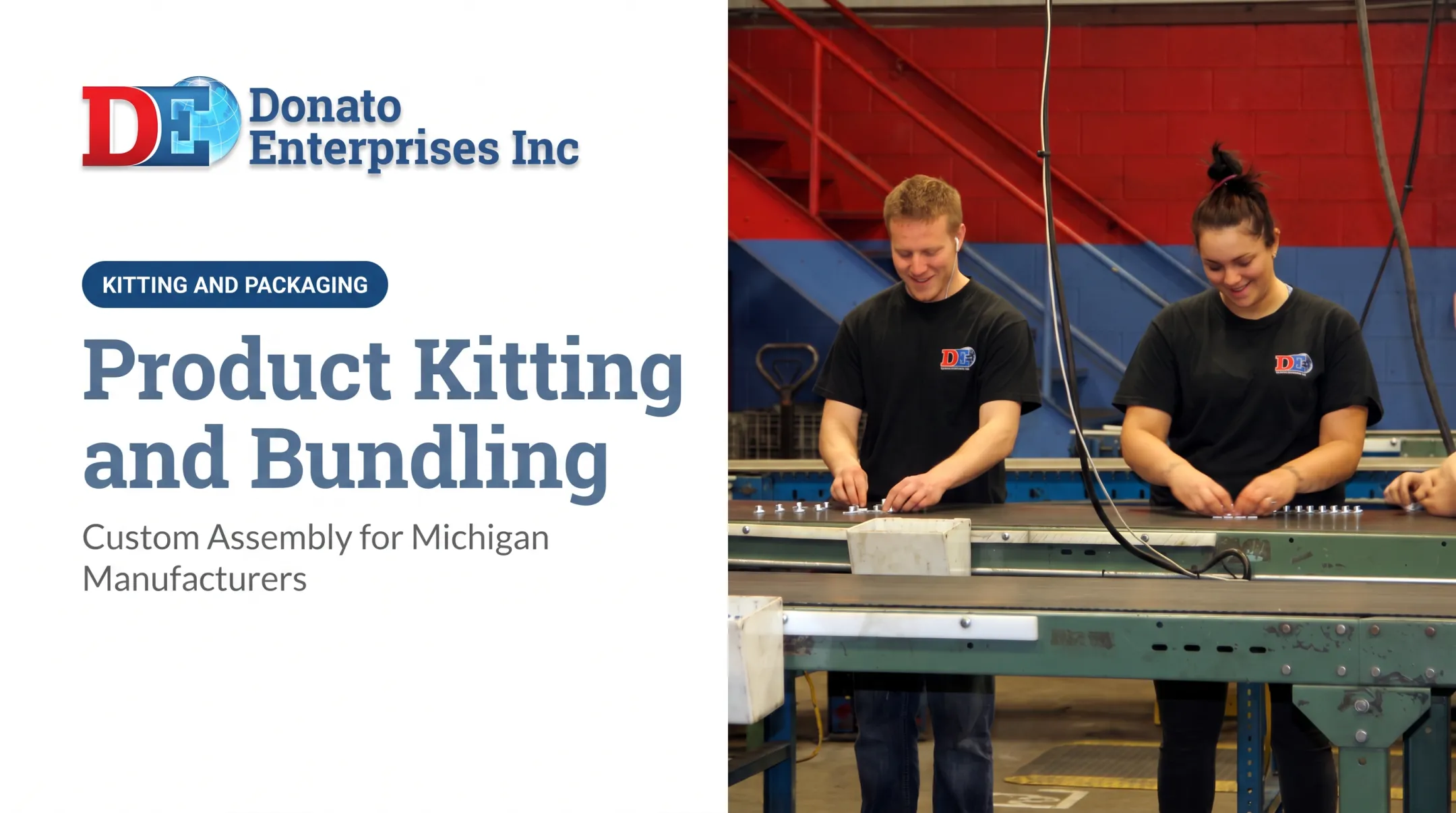
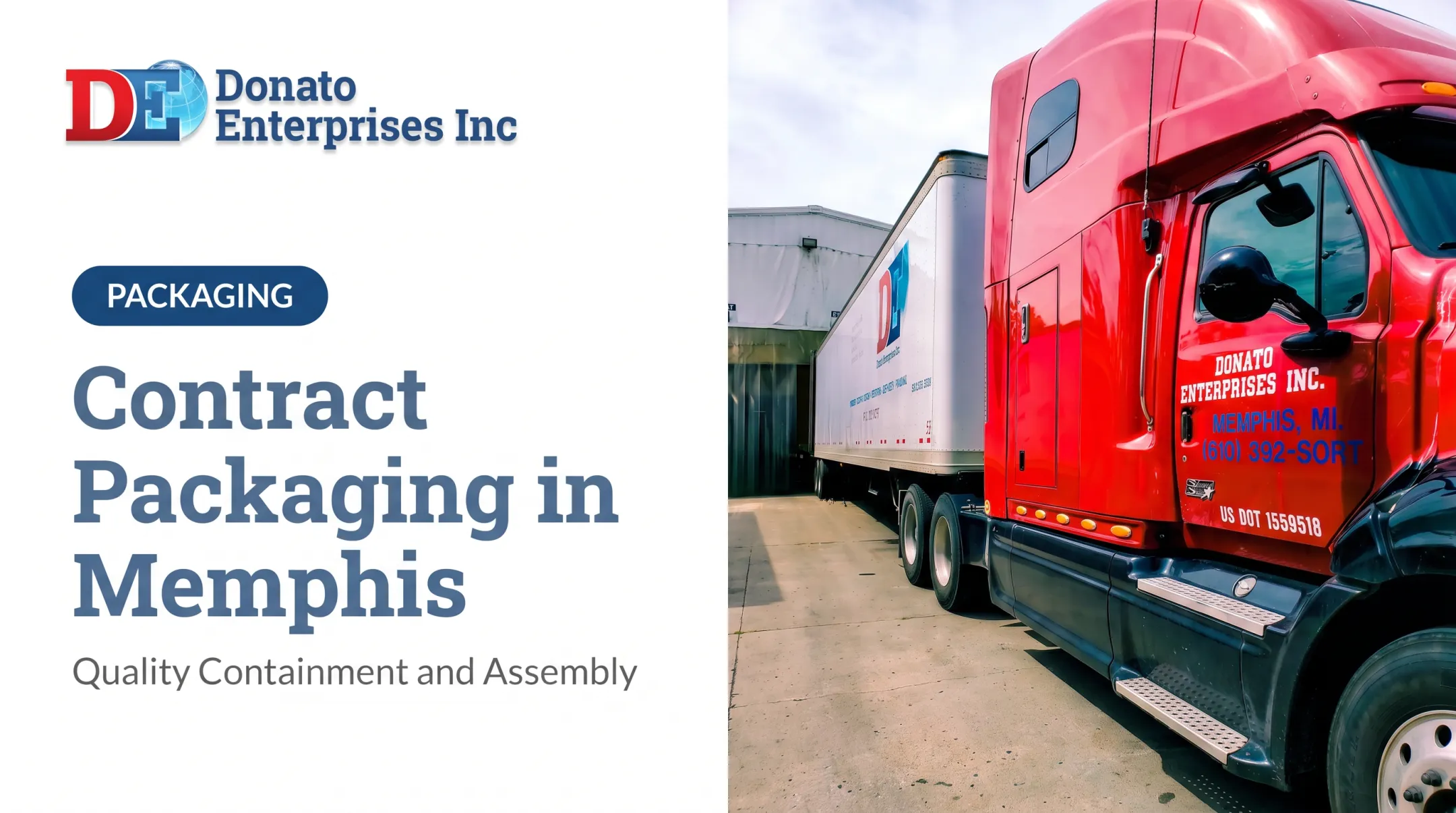
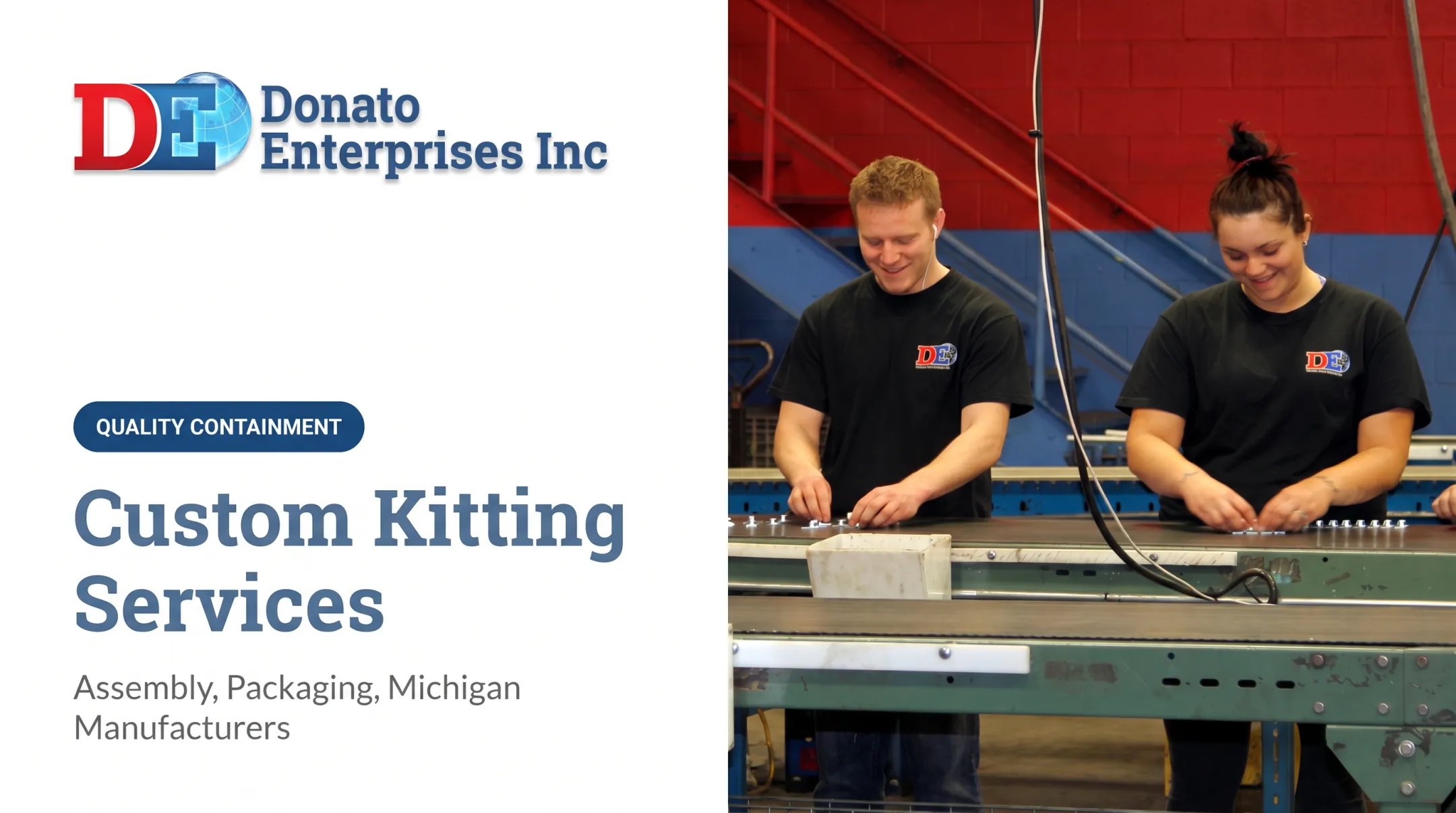
Donato Enterprises, Inc. is a family-owned provider in Memphis, Michigan, founded in 1996. Its work includes inspection, sorting, assembly, packaging, cleaning, deburring, kitting, and quality containment, with more than 100 years of combined team experience.
Packaging covers pre-delivery inspection, label verification, barcode scanning, and Plex ERP support for parts from 0.01 kg to several tons. The company follows QSB, ISO, and GP-12 guidelines; these are not facility certifications.
Packaging and kitting run Monday to Friday, 7:00 AM to 3:00 PM, serving Central and Eastern Michigan, the Grand Rapids area, and Branch County. Confirm scope and response times for your project. Quotes are available at 810-392-7678.
Frequently Asked Questions
What does integrated logistics mean?
Integrated logistics coordinates activities such as receiving, storage, inspection, packaging, inventory control, transportation preparation, and delivery. It avoids managing each as a disconnected step.
What is a repack product?
It is an existing product or component placed in a different packaging configuration, such as a new carton, tray, bag, pallet, kit, or customer-specific pack.
What is packaging logistics?
Packaging logistics manages how packaging supports product protection, handling, storage, labeling, unitization, transportation, and delivery across the supply chain.
How does integrated repack differ from co-packing?
Repacking changes the packaging of an existing product. Co-packing may also involve assembling, branding, bundling, or preparing products in a contract packer's designated format.
When should a manufacturer outsource integrated repack services?
Consider it during urgent containment, capacity or labor shortages, damaged or mixed inventory, new customer packaging requirements, launch programs, or recurring secondary operations.